Saturday, March 24, 2007

Critical Reflection on Improving Student Motivation


Critically reflect on the theories of at least two psychologists and apply their theories to techniques for improving student motivation.


A student who is motivated believes that the content to be learned will, in some way, be either of extrinsic or intrinsic benefit to him/her. The student sees the learning tasks to have some relevance to his/her path in life. This motivational factor relates directly to the fulfillment of needs, as discussed by both Maslow and Glasser.
Maslow’s needs view of motivation describes in ascending order the basis on which meaningful learning can occur. Maslow argued that if one or a combination of these needs were not being met, a student would adjust his/her behavior to meet the defecit.
This is a phenomenon that I observe on a daily basis in the classroom. As a teacher of creative performing arts, I am often challenged by teenagers who claim my subject area to be ‘useless’. If, however, I explore a theme which I know to be in some way connected to their lives or interests, the willingness to participate constructively is heightened. It is the task of the teacher to foster engagement by reaching out to the student so that he/ she can see relevance and thereby satisfy higher order needs.

Similarly, Glasser proposed the following needs: survival, and the four fundamental psychological needs : connectedness/love, power/significance, freedom/responsibility and fun. In my opinion, Glasser’s view reaches to a deeper level than Maslow’s by stressing the fundamental basis of relationships for student motivation.


Although the word is rarely mentioned in public debate on education, the underlying principle is love. In the article : “Teaching as a form of Love”, (1) Metcalfe and Game explore the value of relationships in teaching. They make reference to the works of the philosopher Martin Buber. His “I-Thou” relationship basis allows both teachers and students to see the ‘undefended essence’ of each person. Such a meeting , according to Buber, is where Life happens. Rudolf Steiner education recognises this essential foundation for all meaningful education:

“Receive the child in reverence, Educate the child in love, Let the child go forth in freedom”.
As depicted in the film “Stand and Deliver”, a student can be motivated to near miraculous achievement on the basis of a loving, supportive, respectful and challenging relationship with his/ her teacher.

The second factor of significant influence on student motivation is the self-concept of the student,as well as the beliefs held by the student about the value of his/her learning capacities(self-efficacy). These beliefs impact strongly on the willingness of a student to make a sustained effort or even to ‘have a go’. Weiner(1992) explored the attribution view which examines the factors to which a student attributes his/her success or failure. Those factors which a student believes to be out of his/her control (such as an unreasonably tough exam) undermine student motivation.

A teacher must set meaningful and attainable goals for the students which build on a sense of progress and success. In my teaching experience, I have found that students will willingly work beyond the time limits of the lesson if they are being helped to unravel a ‘knot’ and leave with a sense of confidence and achievement.

The important implications for teachers revolve around the understanding of what students believe about the reasons for their achievements or ‘failures’. I recently had a long discussion with a teenager who was convinced that she was ‘too dumb’ and a ‘loser’ due to the fact that her closest friends are exceptional high achievers. Her belief that she can never match them undermines her self esteem radically..

The third factor influencing student motivation is teacher expectation. A student will rise or fall in both behavior and achievement levels according to the ‘label’ he/she has been given by a teacher. This concept has been increasingly recognised since the publication of “Pygmalion in the Classroom” by Robert Rosenthal and Lenore Jacobson (1968) (2). The effects of teacher expectation can be significant at an individual level, a class group level or a school level.
Rosenthal and Jacobson concluded that self-fulfilling prophecies were commonly at work.
“The teachers had subtly and unconsciously encouraged the performance they expected to see. Not only did they spend more time with these students, they were also more enthusiastic about teaching them and unintentionally showed more warmth to them than to the other students.” (3)

Beginning teachers, as well as those of many years experience must be vigilant in honestly examining their expectations of and attitudes towards students, the influence of which cannot be underestimated. This words from Rudolf Dreikurs sum up the essential aspects of productive teacher-student relationships:


If a child lives with criticism, he learns to condemn.
If a child lives with hostility, he learns to fight.
If a child lives with ridicule, he learns to be shy.
If a child lives with fear, he learns to be apprehensive.
If a child lives with shame, he learns to feel guilty.
If a child lives with tolerance, he learns to be patient.
If a child lives with encouragement, he learns to be confident.
If a child lives with acceptance, he learns to love.
If a child lives with approval, he learns to like himself.
If a child lives with recognition, he learns it is good to have a goal.
If a child lives with honesty, he learns what truth is.
If a child lives with fairness, he learns justice.
If a child lives with security, he learns to have faith in himself and those about him.
If a child lives with friendliness, he learns the world is a nice place in which to live, to love and be loved.

http://wik.ed.uiuc.edu/index.php/Dreikurs,_Rudolf

(1): Metcalfe,A and Game,A Teachers who Change Lives 2006 Melbourne University Press, Melbourne

(2) Rosenthal, R., & Jacobson, L. 1968. Pygmalion in the Classroom. New York: Holt, Rinehart & Winston.

(3) David Newman and Rebecca Smith. (Created September 14, 1999). Copyright Pine Forge Press.
http://www.pineforge.com/newman.

Essential Elements of a Good Discipline Model

What are the essential elements of an adequate discipline model?

An adequate discipline model is one which optimises the circumstances in which teaching and learning occur. This is a highly individual matter and no particular model will fit every situation.
In addition, the discipline model chosen by the teacher will ideally be compatible with his/ her own convictions and with the educational philosophy espoused by the school.

The element which is of vital significance is the creation of positive student-teacher relationships. This is the lasting and invaluable contribution of William Glasser and the foundation upon which all other methods, agreements and techniques rise and fall.

A teacher must be able to draw upon a wide range of discipline techniques ranging from the use of behaviour modification to positive behaviour leadership, depending on what the particular situation calls for. The goal should always be, however long the path, leading the individual to a position of authentic self-responsibility.

It is of vital importance that the teacher has a sound understanding of the psychological theories upon which the various discipline techniques are based and is engaging with the students in a pre-emptive way to avoid problems arising. In the article: “Teachers Make a Difference”, (1) John Hattie highlights the practice of expert teachers in terms of being ‘effective scanners of classroom behaviour’ and being able to ‘anticipate and prevent disturbances from occurring’. Hattie also concurs with Glasser’s view on relationships: ‘respect them as learners and people, and demonstrate care and commitment for them’.

This implies an inner approach of connectedness, of working together. On this basis, guidelines for responsible behaviour can be established openly with the students. The aim of such guidelines is to nurture a sense of belonging, as highlighted by Dreikurs, and to establish a clear framework in which meaningful learning can take place.

Such discipline models must be complemented by competent and enthusiastic teaching. This in itself creates students who are engaged and inspired, responding to a voice of inner authority: In the book ‘Teachers who Change Lives’, (2) Leslie Devereaux describes such an optimal learning situation:

“He was the kind of man who could hold the class’s attention. He took himself seriously in the sense that he took the act of living seriously and I think his authority came from that -I don’t remember him foisting anything on us, but his love of things kept spilling out, his passions…”

These essential elements of a good discipline model culminate in the experience expressed in the words of William Glasser: “Education is the process in which we discover that learning adds quality to our lives.”


(1)Hattie,John: Teachers Make a Difference: What is the Research Evidence? University of Auckland 2003


(2)
Metcalfe,A and Game,A Teachers who Change Lives 2006 Melbourne University Press, Melbourne

Monday, March 19, 2007

Code of conduct for Parents and Caregivers


“There are two lasting bequests we can hope to give our children.
One of these is roots, the other, wings.” Hodding Carter


Parents and caregivers!

Live by example. Teenagers hate hypocrisy. Walk the talk!

Share your lives with your teenagers in a way that is authentic and loving. Share your search for meaning, your struggles and failures as well as your hopes, achievements and questions.

Express your beliefs; describe your faith but never force them onto your teenage child.

Communicate the challenges involved in making responsible choices in life. Involve your teenager in such processes- seeing all sides of an issue and coming to decisions.

Allow your teenager, step by step, to consciously recognize the balance between freedom and responsibility. Support them in increasing their levels of self-responsibility with age.

Take time. Really make the space to spend time together. Share a meal together daily in the absence of television or radio. Listen without judgment.

Be patient. Allow for phases, fads, extremes and contradictions. Nurture your sense of humour.

Show understanding and be generous in times of stress, such as exams or a romance break-up. It will be appreciated.


Be real. If you are annoyed or angry, say so. Don’t pretend you are something that you are not. Communicate honestly your needs e.g. those relating to cleanliness.

Talk to other parents to help put your situation in perspective. Seek professional advice if you need support.

Negotiate boundaries based on common sense. Some issues are black and white, e.g. “Never get into a car with a drunk driver. Call us or call a taxi.” Most issues have grey areas and need open discussion. Negotiate logical consequences should these boundaries be transgressed.

Encourage an active social network as well as out-of -school activities such as soccer, dance, music lessons. Show genuine interest and a willingness to support both financially and with your time.

Be compassionate. Do something for others with your teenager e.g. the Oxfam walk.

Respect your teenager’s need for privacy.

Forgive. Teenagers make mistakes. Don’t hold grudges.

Rejoice! Acknowledge achievements, and positive behavior.


Monday, March 12, 2007


William Glasser
“It is almost impossible for anyone, even the most ineffective among us, to continue to choose misery after becoming aware that it is a choice.”
These Seven Caring Habits are:
1) Supporting;2) Encouraging;3) Listening;4) Accepting;5) Trusting;6) Respecting; and7) Negotiating differences
while also listing his Seven Deadly Habits:
1) Criticizing;2) Blaming;3) Complaining;4) Nagging;5) Threatening;6) Punishing; and7) Bribing or rewarding to control
(William Glasser Institute, 2005).

Classroom Management

Glasser's Theories in Practice:
http://www.brains.org/classroom_management.htm

Sunday, October 22, 2006

A Sense of Place


A Sense of Belonging
An ideal learning space gives students a sense of home, of belonging.Like a nest, it offers security and orientation,it is also a place from which one can stretch one's wings...
A 'sense of place' - an identity - is something all communities need, and indeed it can be argued that a principle cause of alienation, crime and dysfunction is the loss of this sense of identity.

Our relationship with the land is one of belonging to, caring for, being cared for and growing up with: our land is our mother. The sense of place that is embedded within the souls of all aboriginal people is the obligation to ensure the very life and survival of our Mother Earth, the bearer of all creation.

http://www.urbanecology.org.au/ecocity2/senseofplace.html

Constructivist Learning


A constructivist approach
I envisage active, engaged learners, an enthusiastic teacher and a myriad of opportunities for the children to learn with and from each other,using quality resources.
"Constructivism does not claim to have made earth-shaking inventions in the area of education; it merely claims to provide a solid conceptual basis for some of the things that, until now, inspired teachers had to do without theoretical foundation. "von Glasersfeld see: Summary:
http://www.cdli.ca/~elmurphy/emurphy/cle6.html

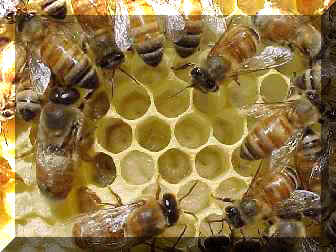
I have chosen the image of a beehive to represent a place of interconnectedness. My ideal learning space would be home to a beehive of activity in a series of linked spaces. There would be a room with nothing at all in it besides musical instruments and a sound system. There would be a room like a conventional classroom with desks, chairs and computers. There would be smaller rooms leading off these, for group or individual work. Ideally, the space would include a kitchen and a garden, and doors wide open to community involvement. Bright colours,organic Gaudi-inspired architecture,big windows open to the world...

Education is not "teaching a fact for its own sake, but for teaching children to go on beyond what is given." It should never become "just a transmission of what we know, without a sense of what is possible." Jerome Bruner

Connectivism


Networked Learning , a Sense of Community

Creative learning brings about new and interesting ways of connecting quality content.
George Siemens can be heard here talking about Connectivism and its implications for education:
http://www.elearnspace.org/media/Connectivism_IOC/player.html

There is no one definition of a learning community; however, a common definition is:“Any one of a variety of curricular structures that link together several existing courses---or actually restructure the material entirely---so that students have opportunities for deeper understanding and integration of the material they are learning, and more interaction with one another and their teachers as fellow participants in the learning enterprise.”
http://aaweb.lsu.edu/slc/whatIs.htm
See also:
http://learnweb.harvard.edu/ent/home/index.cfm

Reflective Practice


Critical reflection is the process of analysing, reconsidering and questioning experiences within a broad context of issues. I have chosen this image from Dali because of its centering quality. True critical reflection comes about when a content has been internalised and given a new, meaningful context.

This is a source of useful strategies for good reflective practice:
http://www.une.edu.au/tlc/alo/critical4.htm

Deep Learning:
More than just the accumulation of information.
The students must have been in contact with meaningful content from all facets of life.This gives the necessary framework for deep learning to occur.
Deep, as opposed to superficial learning:


Focus is on “what is signified”
Focus is on the “signs” (or on the learning as a signifier of something else)
-
Relates previous knowledge to new knowledge
Focus on unrelated parts of the task
-
Relates knowledge from different courses
Information for assessment is simply memorised
-
Relates theoretical ideas to everyday experience
Facts and concepts are associated unreflectively
-
Relates and distinguishes evidence and argument
Principles are not distinguished from examples
-
Organises and structures content into coherent whole Task is treated as an external imposition Emphasis is internal, from within the student
Emphasis is external, from demands of assessment


http://www.learningandteaching.info/learning/deepsurf.htm
-


Learner Diversity


Diversity and Differences:
Individuality requires flexibility in teaching. a teacher needs to attune his perception so that the individual needs of every learner are met. Multiple intelligences need to be catered to.So too talents and learning challenges and cultural perpectives.

See : Teaching with diversity checklist:
http://www.csd.uwa.edu.au/tl/99TDChecklist.htm

Power and Freedom


Power and Freedom

Today's learners are strong individuals who need to be empowered to find their own paths. They need to be anchored in a secure sense of self in order to determine their optimal ways of learning. In an atmosphere of mutual respect and support, individual power and freedom enrich the learning potential of students.

See Glasser's theories on personal choice and responsibility:
http://en.wikipedia.org/wiki/William_Glasser

Creativity


Creativity -
a living approach to education which can enliven every facet of learning. This is a fundamental principle of Steiner education.
"I think that it is not exaggerated to say that no other educational system in the world gives such a central role to the arts as the Waldorf School Movement. Even mathematics is presented in an artistic fashion and related via dance, movement or drawing to the child as a whole."Konrad Oberhuber, Professor of Fine Arts, Harvard University
http://www.waldorfschool.com/results_of_a_waldorf_education.htm

"Conditions for creativity are to be puzzled; to concentrate; to accept conflict and tension; to be born everyday; to feel a sense of self." -- Erich Fromm

Transformation of the Individual


Transformation of the Individual
An ideal learning process would develop the potential of each learner and lay the foundations for curious, enthusiastic life-long learning. A creative educational process should become a well-spring of inspiration for later life, full of rich memories, a sense of mystery and a seach for meaning.
In the words of Howard Gardner:
I want my children to understand the world, but not just because the world is fascinating and the human mind is curious. I want them to understand it so that they will be positioned to make it a better place. Knowledge is not the same as morality, but we need to understand if we are to avoid past mistakes and move in productive directions. An important part of that understanding is knowing who we are and what we can do...

Transformation of Society


Transformation of Society

Students should beinspired to strive to make the world a better place and share the gifts of their talents in a way that promotes social justice and sustainability. These ideals cannot be imposed upon anyone but would ideally arise from each person in an expression of freedom and responsibility


All who have meditated on the art of governing mankind have been convinced that the fate of empires depends on the education of youth: Aristotle

Tuesday, June 27, 2006


The Development of Bodily-Kinesthetic Intelligence in Children:
Implications for Education and Artistry
By Jay.A.Seitz
www.york.cuny.edu/~seitz/HolisticEd.pdf


In this article, Seitz draws attention to the potential of
artistic movement, particularly dance, for nurturing intelligence in children. Jay points to the now widely acknowledged problem that traditional intelligence tests, in focusing almost exclusively on linguistic and mathematical skills, have neglected the acknowledgement of many abilities which have been regarded as not relevant for the development of higher-order cognitive skills.

Seitz traces the central role of movement in the development of speech and thinking from infancy. Recent studies have confirmed that the parts of the brain which control voluntary movement are connected by neural pathways to those parts of the brain which manipulate ideas, suggesting that we think kinesthetically.

Seitz supports Gardner’s acknowledgement of a bodily-kinesthetic intelligence as a distinct ability with two components:

1: masterful coordination of one’s bodily movements
2: the ability to manipulate objects in a skilled manner.

The three central cognitive skills in body-gestural expression are highlighted in their relevance for the artistic development of movement. These are:

1: motor logic - the clear ‘ idea ’, or syntax of movement
2: kinesthetic memory – the reconstructing of movement and the positioning in space
3: kinesthetic awareness- the appreciation of posture, balance, symmetry, resistance, tension and weight.
All three elements are important components of dance.
Important too are the abilities to imitate and to understand the expression of ideas and feelings in movement. These latter two skills are located in the special realm of ‘artistic intelligences.’

Seitz points to the ‘problem-solving’ nature of refining artistic movement, whereby the learner matches, to an ever increasing degree, his own movements with an ideal e.g. an arabesque.

Artistic movement is said to develop the learner on the physical, sensory, emotional and intellectual levels. The aesthetic, social and cultural understandings arising from artistic movement have been largely undervalued by educators in western societies, so too the relation to spatial and musical intelligences. Seitz advocates curriculum changes to address a broader profile of intellectual abilities and an earlier nurturing of artistic movement.


My teaching experience has focused largely on a form of artistic movement known as eurythmy (the movement of music and speech) and the teaching of cultural (folk) dance. I have taught all levels from pre-school to year 12.
My work with very young children focuses strongly on movement qualities taken from nature, animals and stories such as fairy tales. The movement is imaginative, free-form and not highly organised. Through the primary years the children bring more conscious awareness into their individual expression, concentration, coordination and increasingly complex spatial and group forms.
The high school years see a refinement of these skills whereby the student is increasingly challenged to become the creator and choreograph of group performances.

I have witnessed the calming, ordering and enlivening effect creative movement has on children’s behavior. My work aims to support and enhance the curriculum in fully integrated way. I have seen ‘cross-pollination’ effects too: one French teacher was certain the children performed far better if her lesson came immediately after a lesson in eurythmy. In accordance with Seitz’s observations, I have become convinced of the value of eurythmy and folk dance in nurturing inter and intra personal intelligence, spatial awareness, linguistic and musical appreciation, social and cultural understanding.

Children are natural movers and it seems a crime that they are made to learn so much whilst sitting still! Adolescents are often chaotic or lethargic in their movement and benefit enormously from balancing these extremes in a soul-enriching form- not just through sport. Like Seitz, I strongly advocate curriculum reform. I am working as part of a creative arts committee to bring about change in my local public school.

Dancing in all its forms cannot be excluded from the curriculum of all noble education; dancing with the feet, with ideas, with words…… ~Friedrich Nietzsche


The Steiner education system has embraced the need for artistic movement whole-heartedly since its inception. The performing arts are seen as crucial for the appreciation of the dignity, worth and beauty of the human being. The effects of artistic movement for broader learning are highly utilized.

Focused, flexible, coordinated and agile movements awaken these qualities in thinking (as supported by Seitz: we think kinesthetically). Movement which reflects both the outer world and the inner experience nourishes emotional development, broadening the depths of feeling in students.(Seitz refers to better interaction with other people and objects in the world). In artistic movement, we see the Waldorf education principle of thinking, feeling and doing exemplified on both an individual and social level.

In addition, Steiner emphasized the spiritual qualities of artistic movement: “Through Eurythmy, man comes nearer the divine than he otherwise could”. As Friedrich Nietzsche boldly expressed: “I would believe only in a God that knows how to dance.” Seitz neglects to refer to this aspect of dance -surprisingly- considering the role dance has played through the ages in religious rites. “Dancers are the athletes of God.” according to Albert Einstein. Here a clear connection can be made to the nurturing of Gardner’s existential or spiritual intelligence. This may seem a difficult avenue to explore in school curriculum, yet I have found that artistic movement to truly great works of poetry and music accesses the existential realm effortlessly…

We ought to dance with rapture that we might be alive... and part of the living, incarnate cosmos. ~D.H. Lawrence

Sunday, June 25, 2006

Excel

Here's a great excel table with 258 reviews of leson plans, webquests,powerpoints, including hyperlinks! Excellent.

http://training.scottcounty.net/In-service%20January%2020_2003/Teachers%20Review%20and%20Rate%20the%20Site%2001-20-03%20Master%20File.xls

Distributed Learning Environments

“Logged Out” was the title page of today’s News Review in the Sydney Morning Herald (24 June 2006). In this article, educationalists argued for the advantages of computer-based teaching methods and pointed to the “digital divide”-those students disadvantaged by not having access to the internet. According to Barbara Stone, principal at MLC Burwood: ”If we don’t exploit this technology, which is so much part of our life, we do students a great injustice”.
There are, however, reports claiming that the use of technology in the classroom has failed to enhance learning outcomes (Evans as quoted by Carol Steketee, see: http://www.ecu.edu.au/conferences/herdsa/main/papers/ref/pdf/Steketee.pdf)

Essays such as Gideon Haigh’s “Information Idol- How Google is making us Stupid” highlight the global nature of the problems educationalists are facing:

“Education is an institution dominated by the pressures of mediocrity. Schools are places where treating the average needs with the average amounts of resources has long been the rule - a fact that, unfortunately has become extremely comfortable and therefore deeply entrenched.” Google delivers every student the same not-very-good and not-very-bad resources necessary to craft a perfectly mediocre response. It lends itself not so much to learning as to the appearance of learning - which to politicians is, frankly, of paramount concern.
http://intermaweb.net/index.php/2006/03/05/information-idol-how-google-is-making-us-stupid.

See also "Google Schmoogle":
http://www.abc.net.au/rn/talks/8.30/mediarpt/stories/s1571598.htm

The crucial step is to employ technological tools appropriately in order to facilitate optimal learning processes. The constructivist approach is being extended, the idea of collaborative group activity is now at the forefront. The Distributed Learning Environment(DLE) is a context whereby technology can be used to enrich and ultimately transform the process of learning.

The DLE brings about a significant shift away from teacher-based learning. The learner is seen to be an individual in context i.e. with access to resources, technology and social interaction.
The role of the teacher takes on more the nature of a facilitator, who provides guidance and affirmation. The teacher needs to create the basis for constructive teamwork to emerge. In the classroom this means that communication skills need to be nurtured (such as listening, acknowledging and reflecting). The teacher should be able to assess the contribution potential of the student on the basis of an understanding of the implications of multiple intelligences. Skills such as independent thinking and discernment need to be cultivated. These elements provide the crucial pre-conditions.

Ideally, technology can enhance collaborative learning with tools that are intelligently implemented (such as mind-mapping and blogging). A virtual on-line learning community can access immense resources and an abundance of ideas, so that the whole becomes much more than the sum of its parts.

If implemented wisely, judiciously and collaboratively, the use of technology in education could overcome the current problems of superficial mediocrity and move towards the empowerment of the active creative learner.